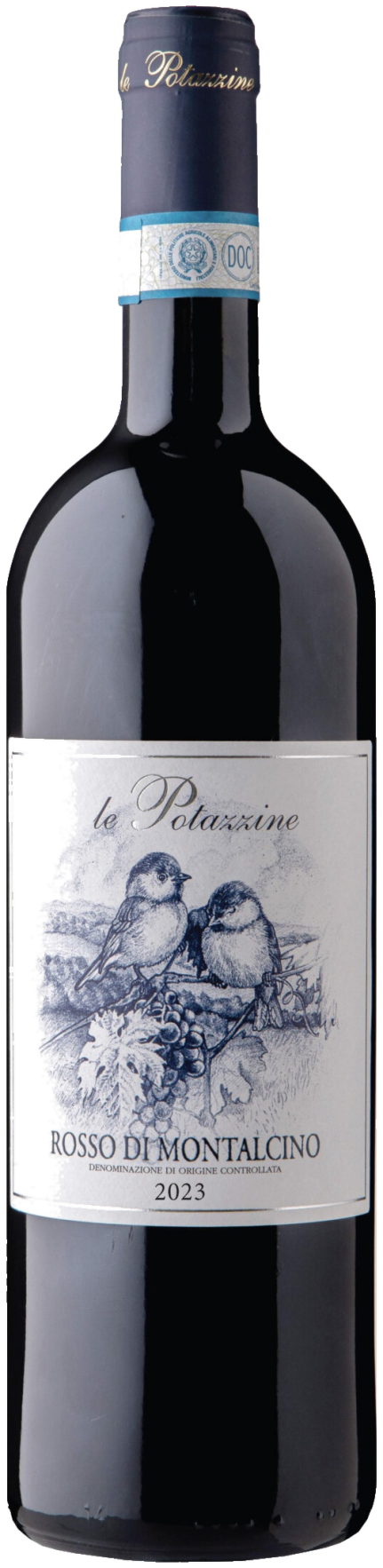
A vintage that demanded craftsmanship: a wet spring cost fifteen percent of the crop. What remained was fully ripe. Robert Parker awarded 90 points, Bibenda its Wine Classics distinction.
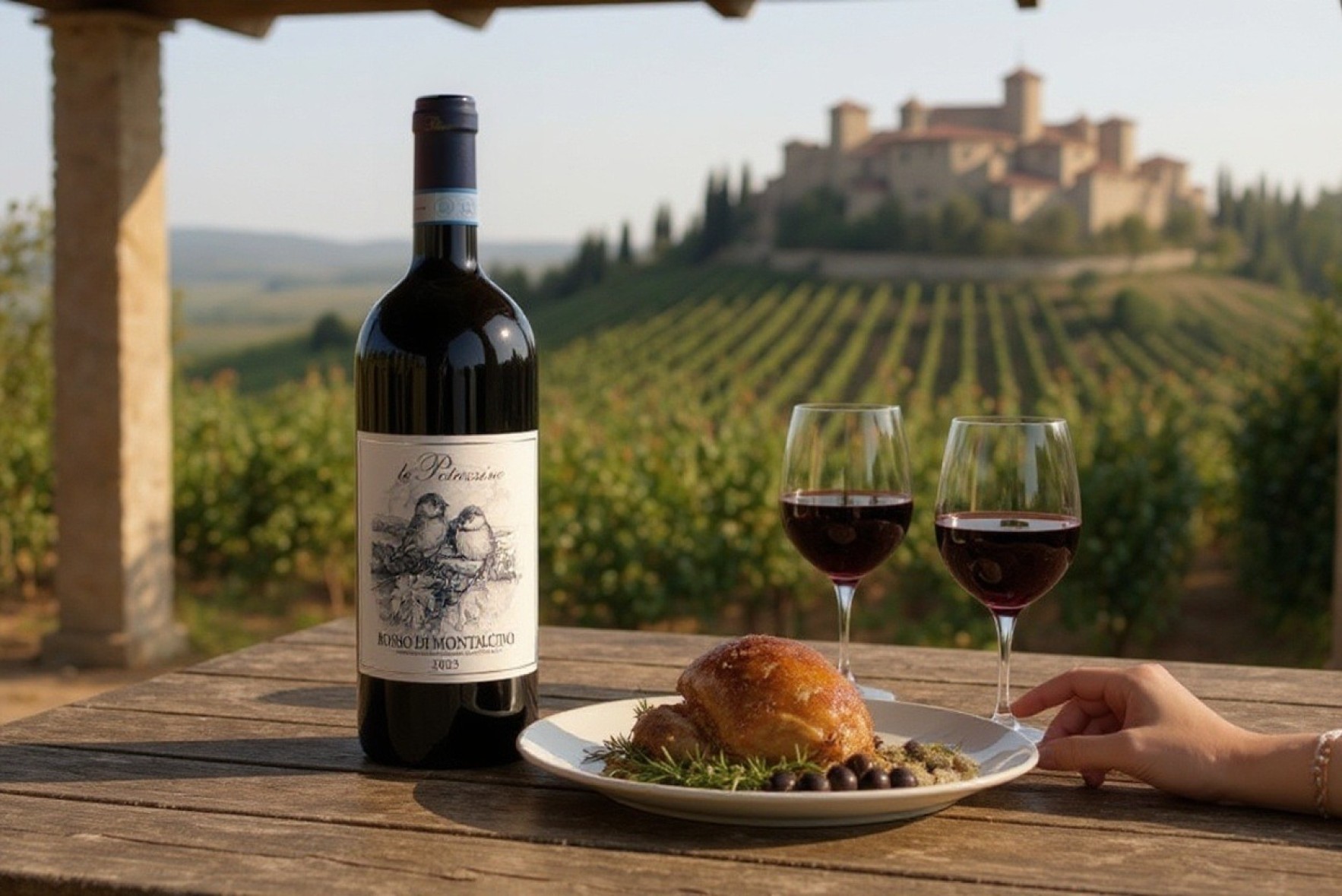
Bright ruby red. The nose opens on red woodland fruit, with rose petal, fresh herbs, a fine tobacco note and a hint of liquorice behind it. On the palate the wine is broad and enveloping, with fine tannins and a good acidity that brings pleasant freshness and a long aromatic finish. The producer notes it is enjoyable already, but that a year or two in bottle moves it unmistakably towards Brunello. In magnum, where maturation runs slower, you may safely make that four years. Serve at 16 to 17 degrees, with roast poultry, a mushroom risotto or a dish from the oven.
In Montalcino, grandparents call their granddaughters potazzine, after the small, brightly coloured birds of the Tuscan countryside. That is what their grandmother called Viola and Sofia, the daughters of owner Gigliola Giannetti — and the estate grew in step with them: Viola was born in 1993, the founding year, and when Sofia arrived in 1996 two more hectares took the total to five.
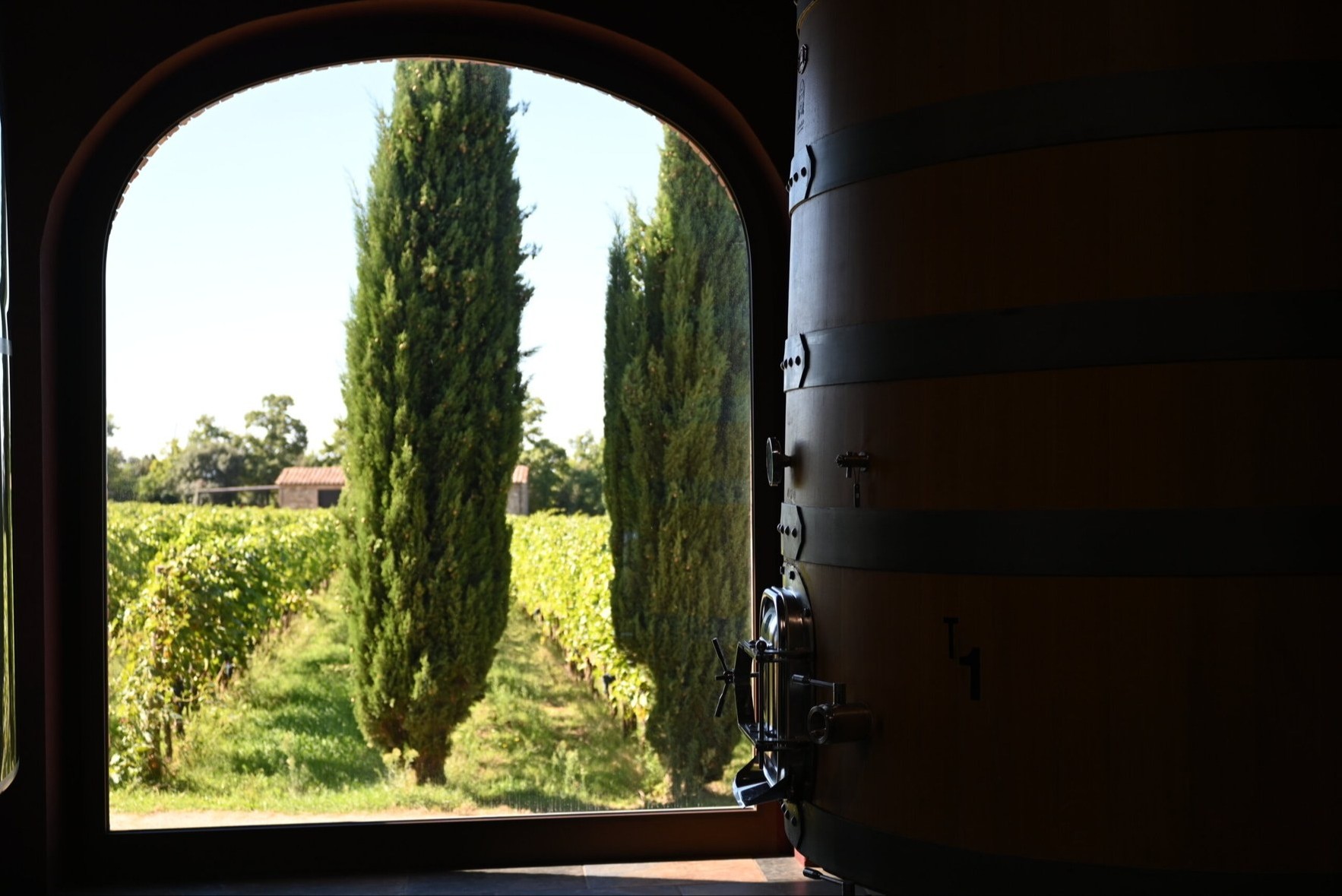
The Rosso here is no by-product. Almost half the Brunello production is declassified into Rosso: the same vineyards, the same wild yeasts, the same forty-day fermentation — only twelve months in the large Slavonian casks instead of nearly four years. Unfiltered, like everything here.
In a disease-prone year like 2023, the altitude of the vineyards was not a luxury but a rescue: it kept the grapes healthy where lower-lying plots gave in.
 Exclusive wines from around the world