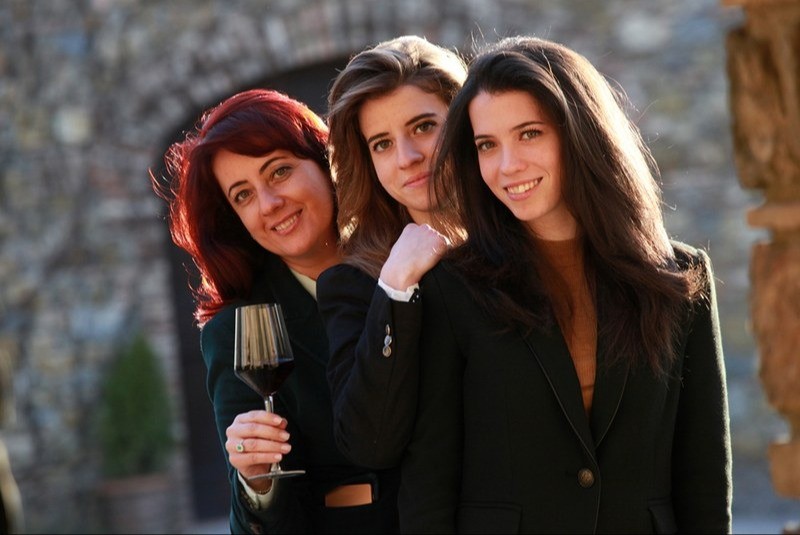
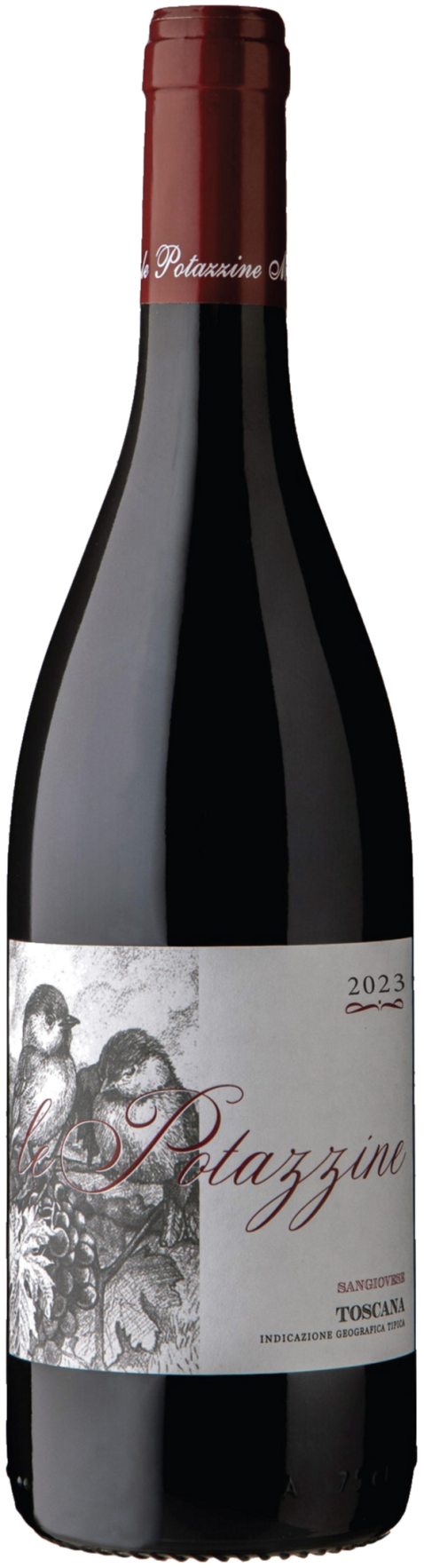
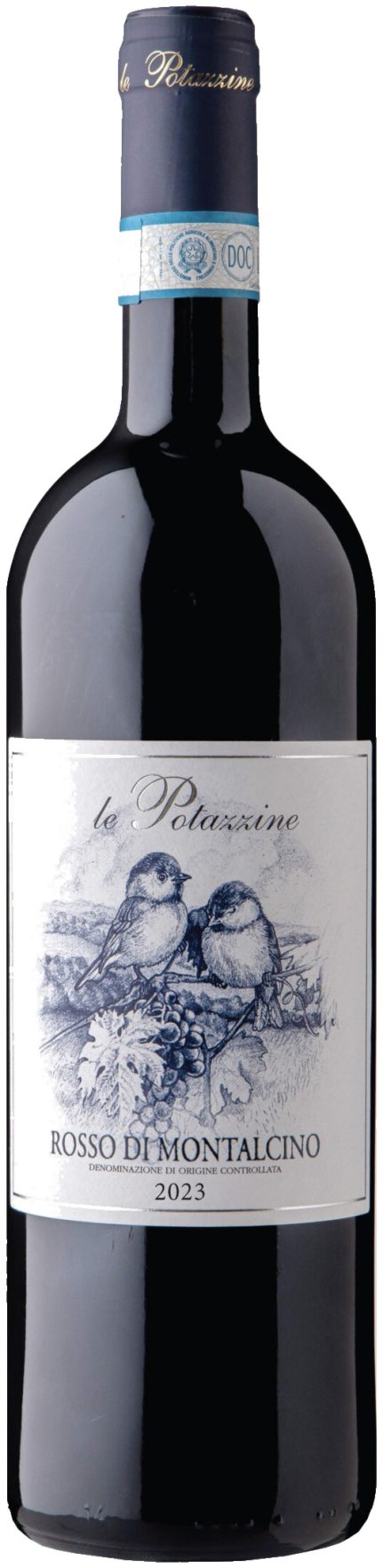
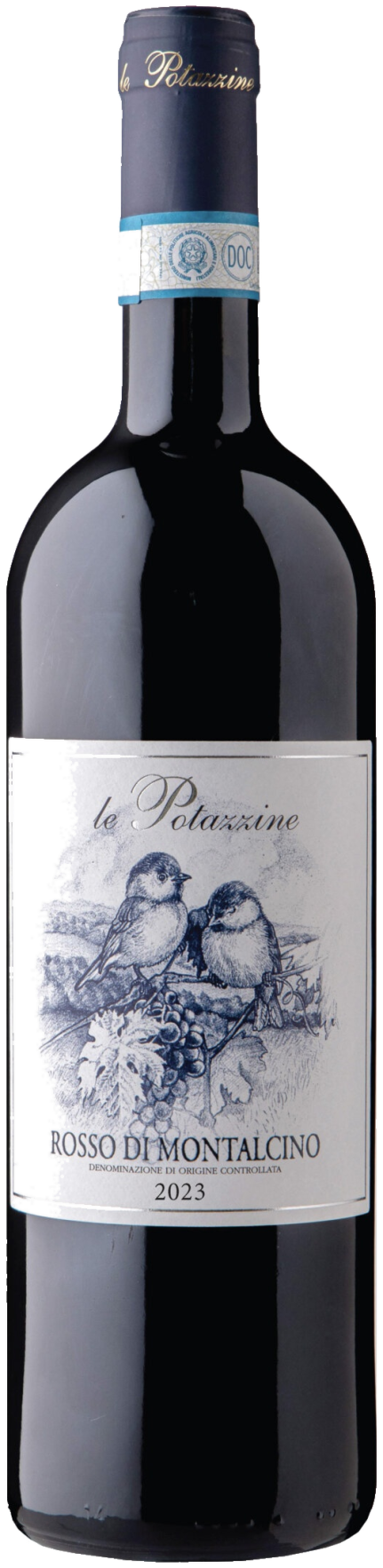
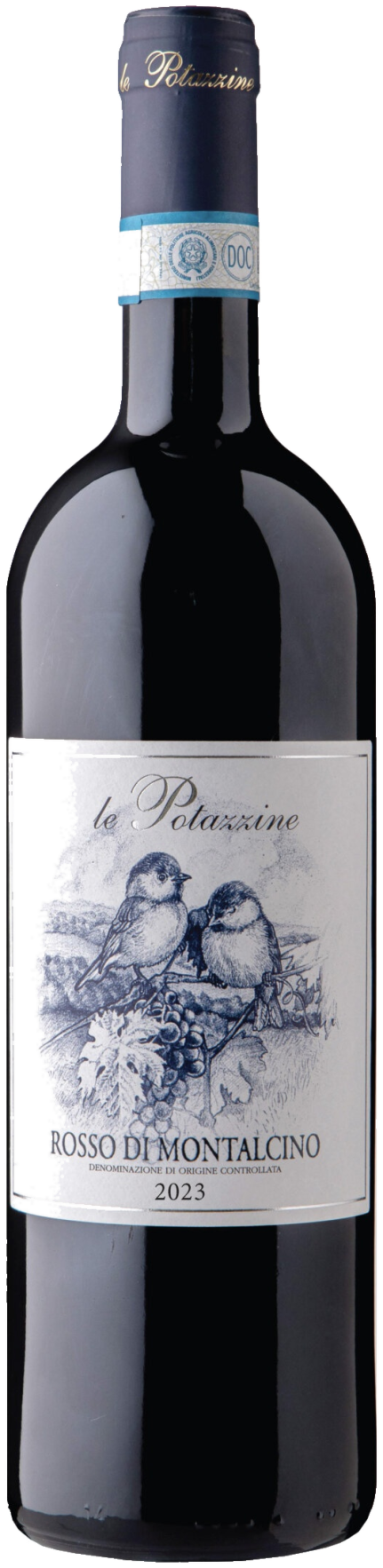
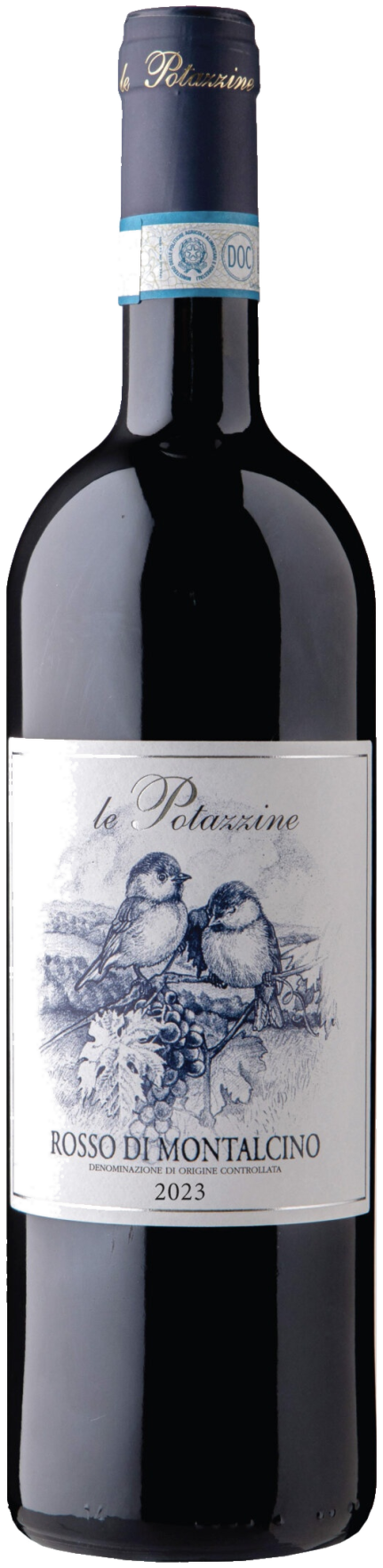
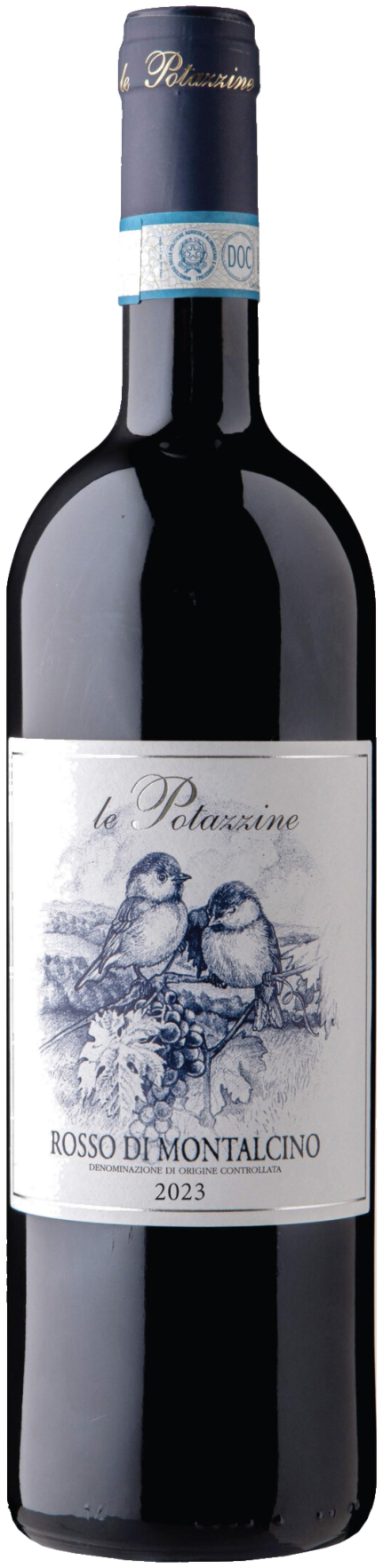
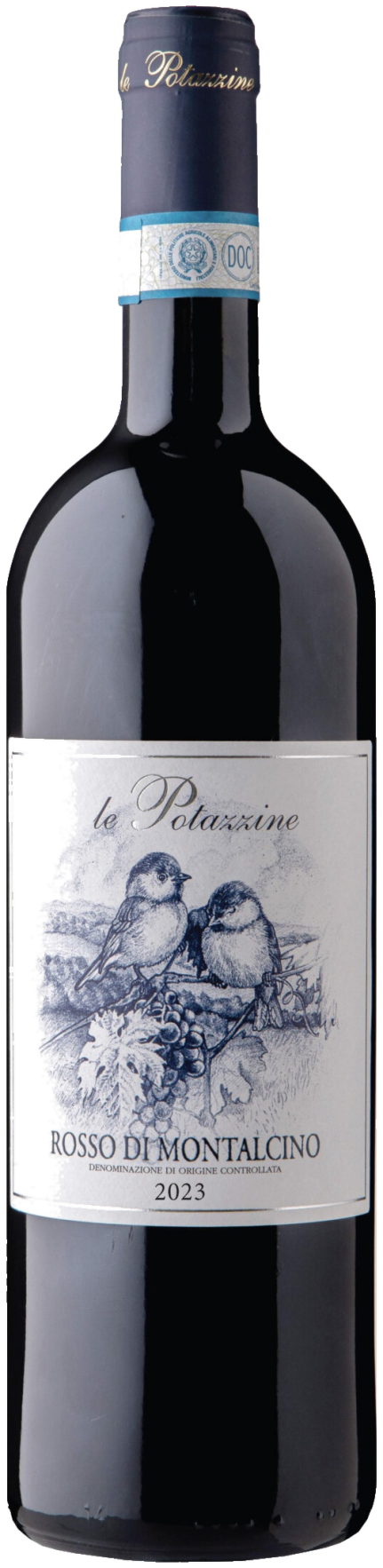
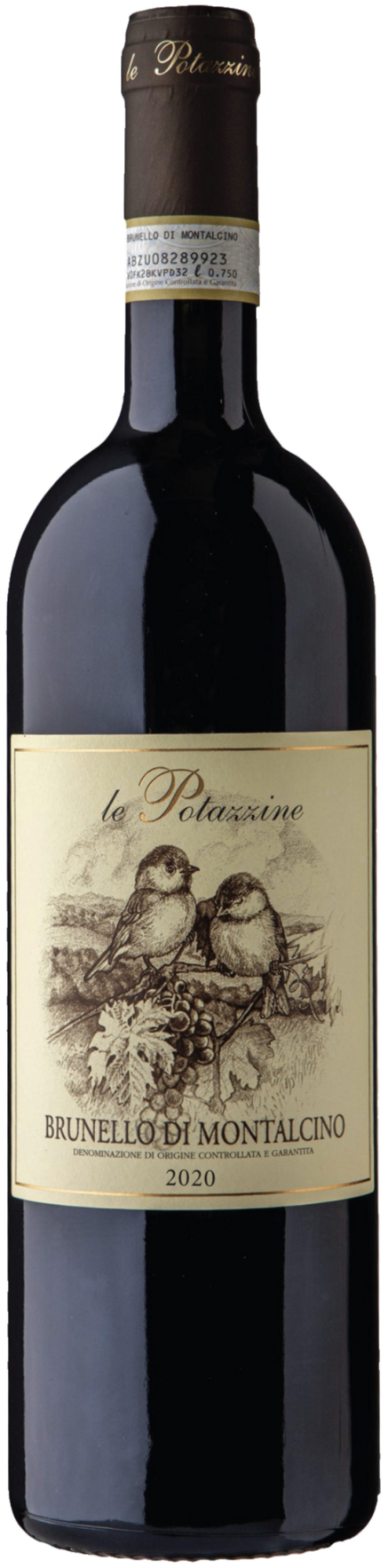
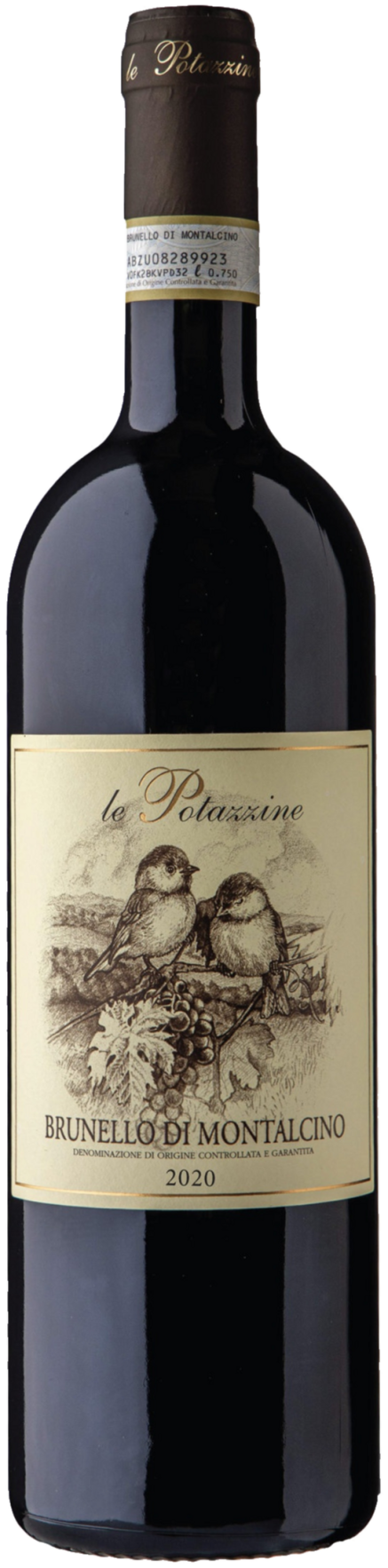
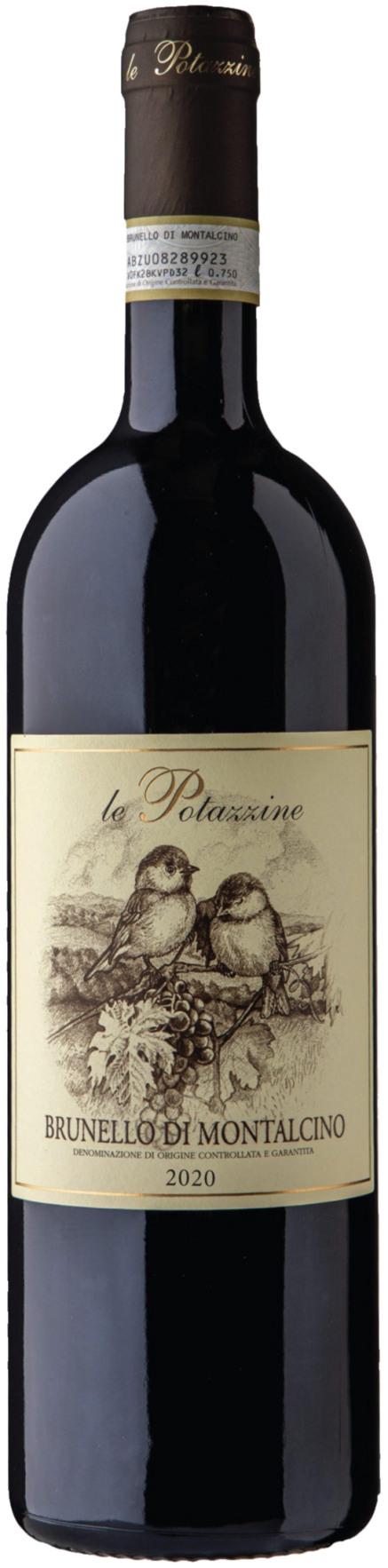
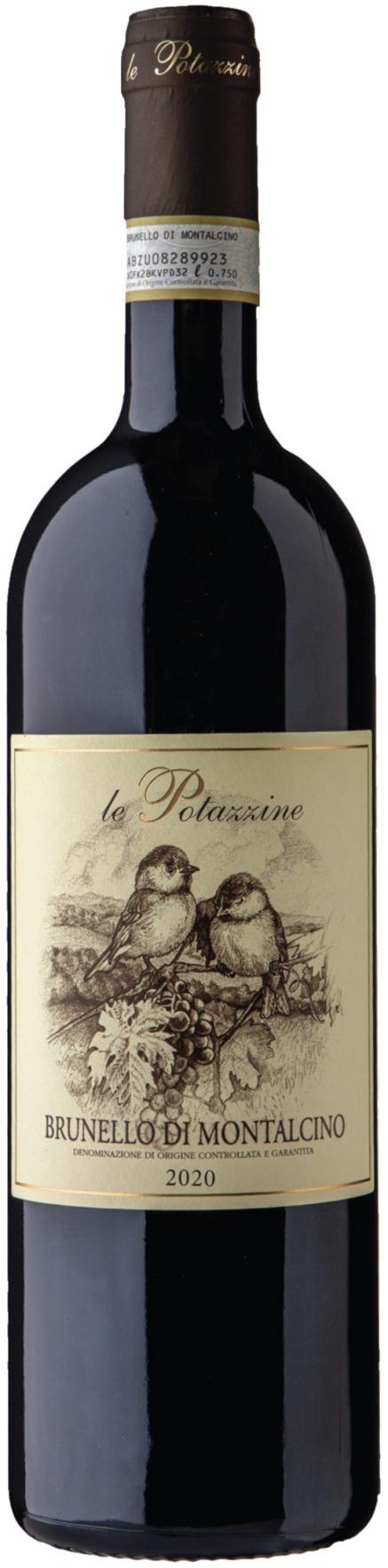
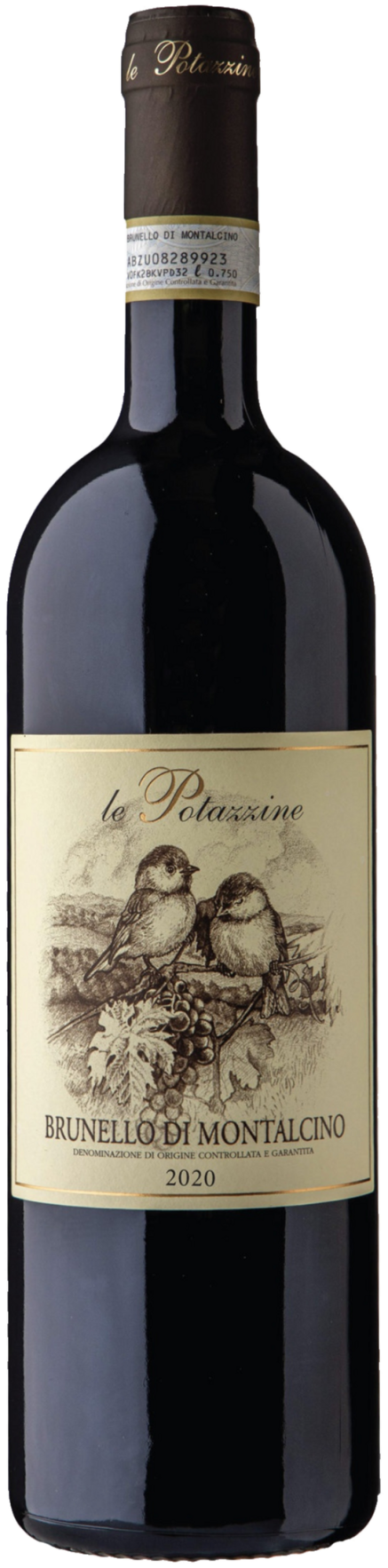
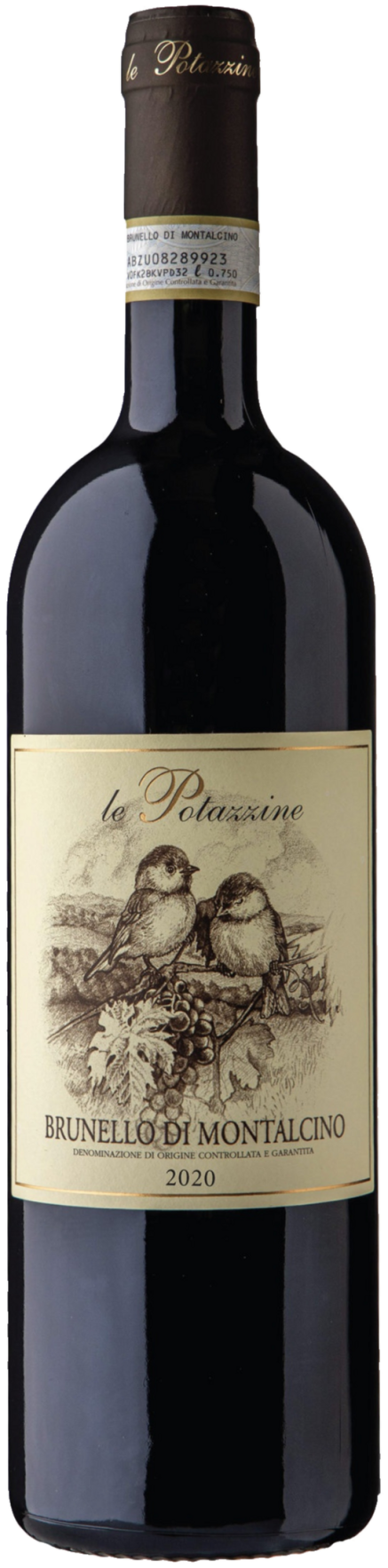
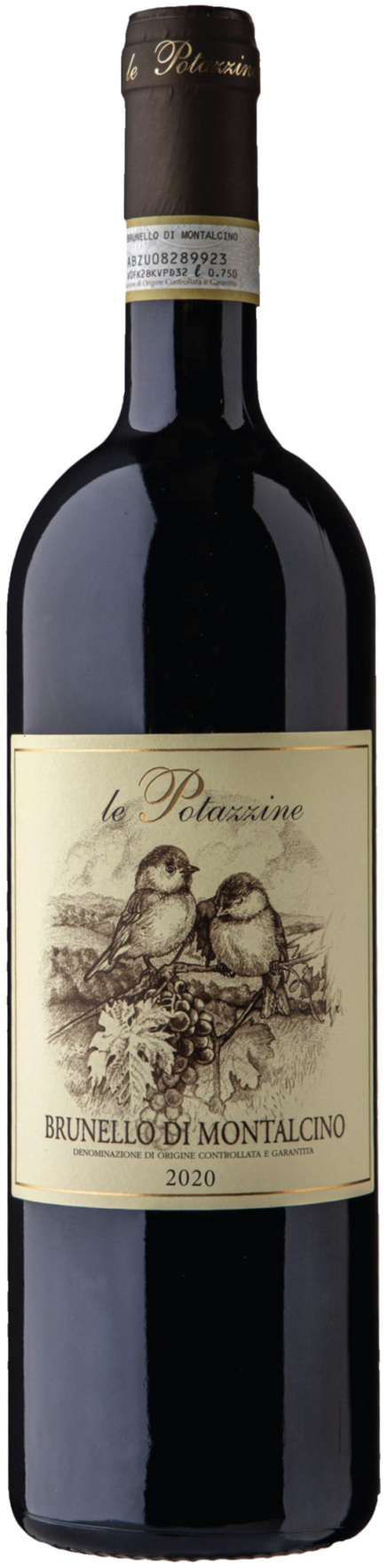
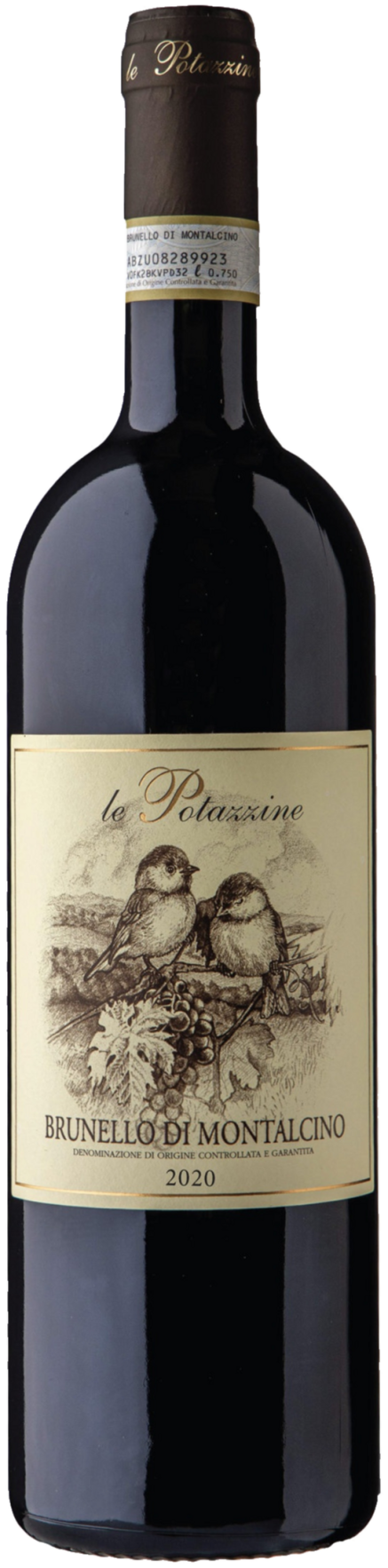
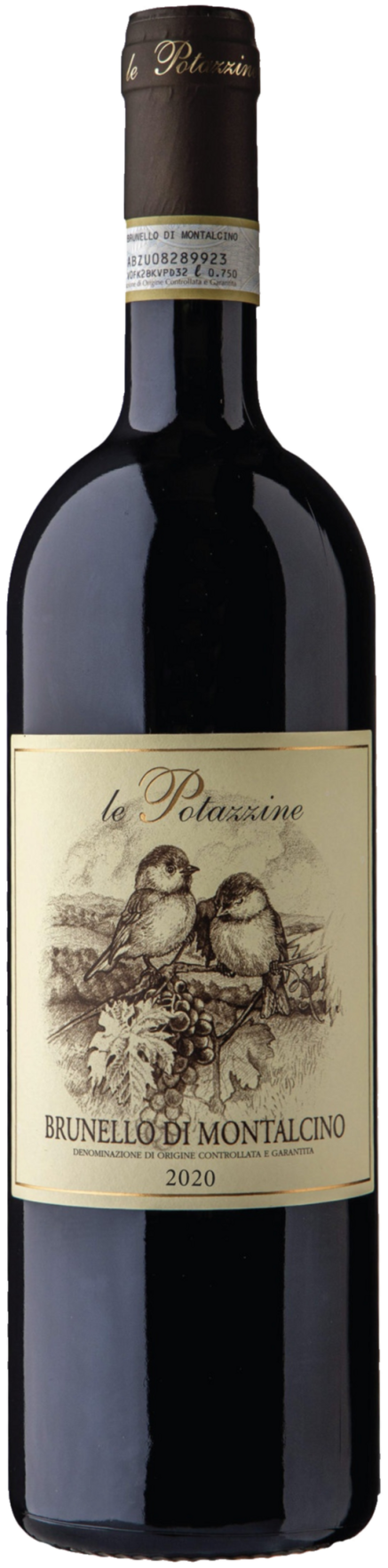
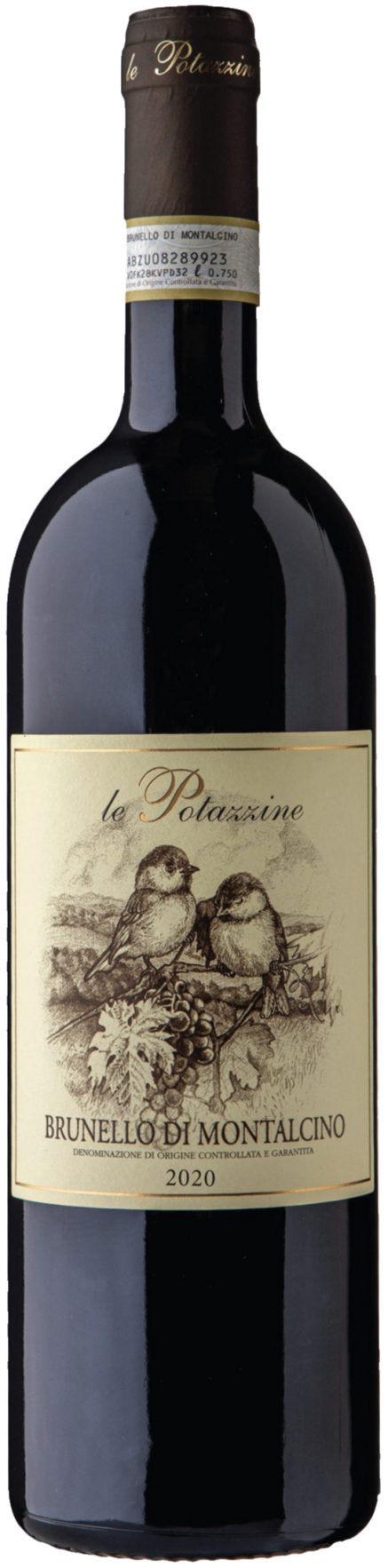
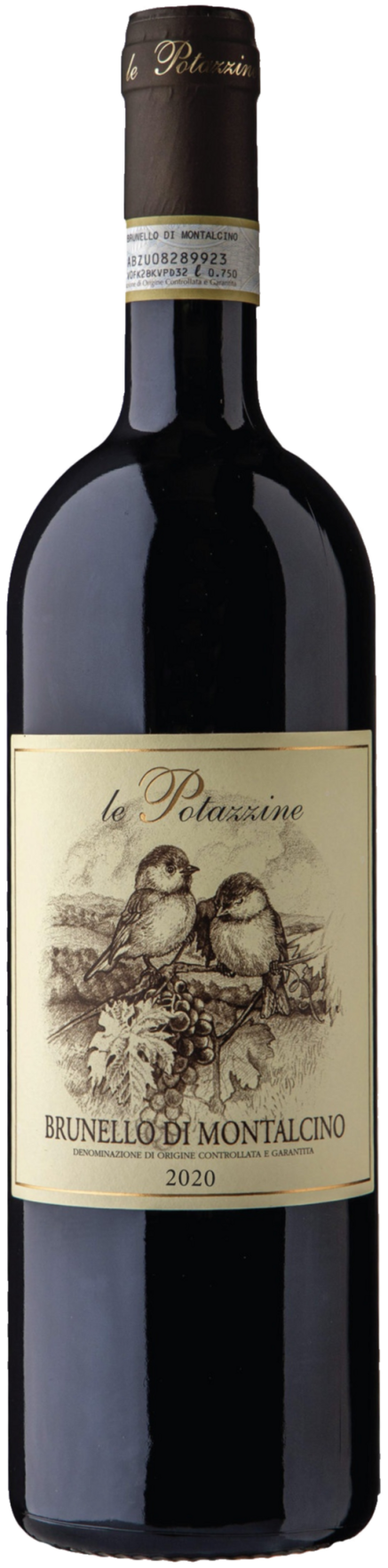
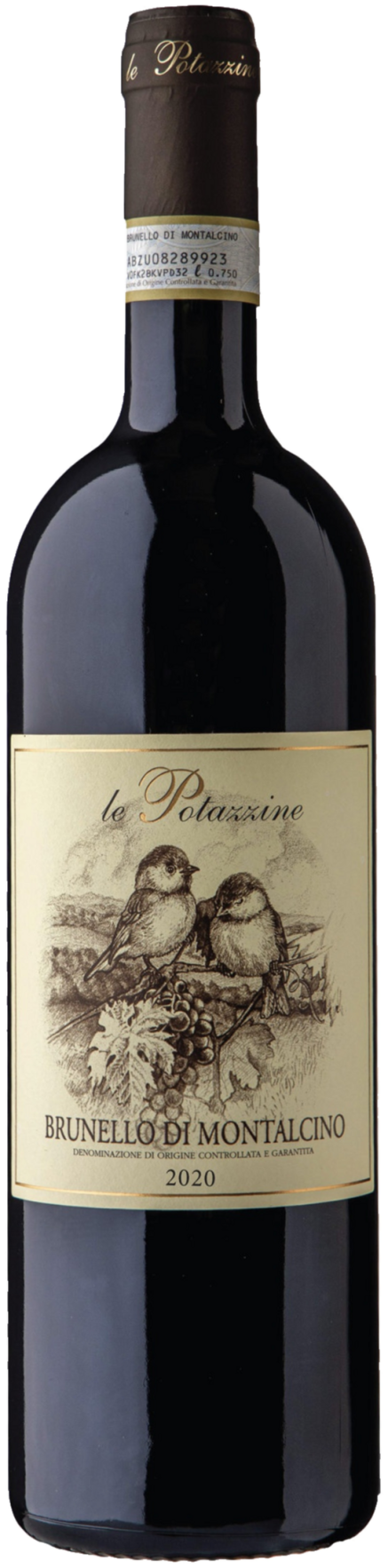
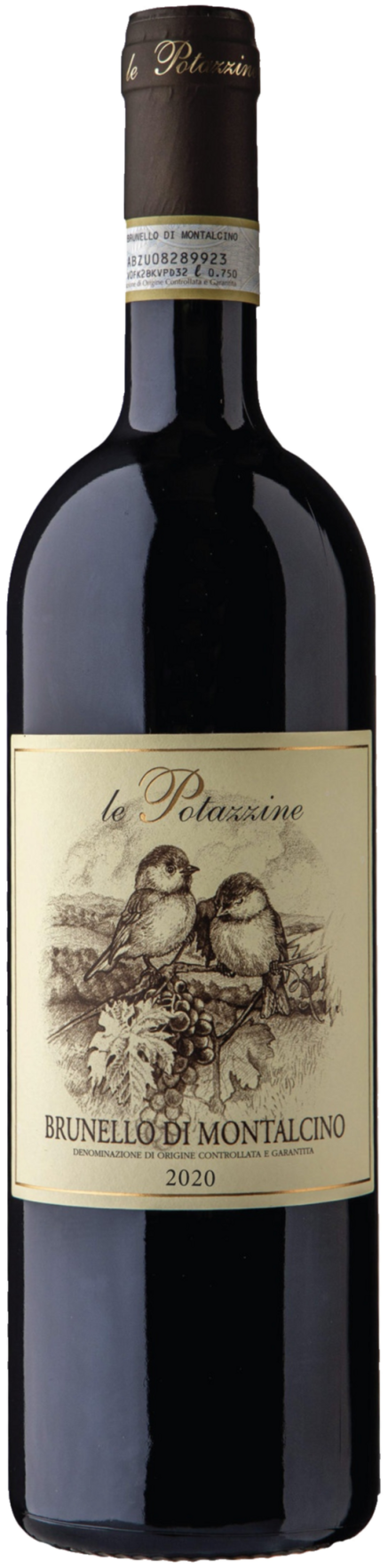
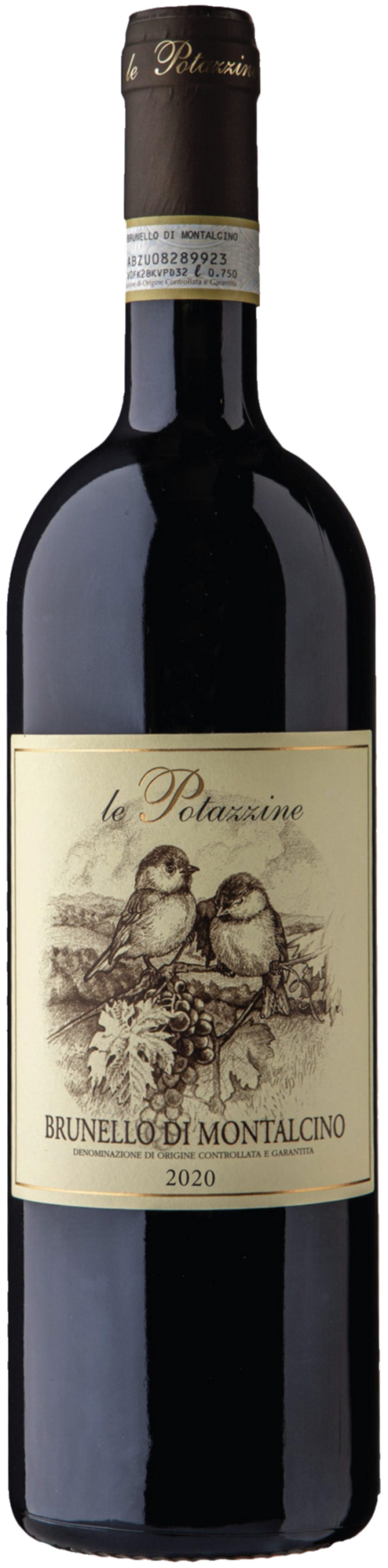
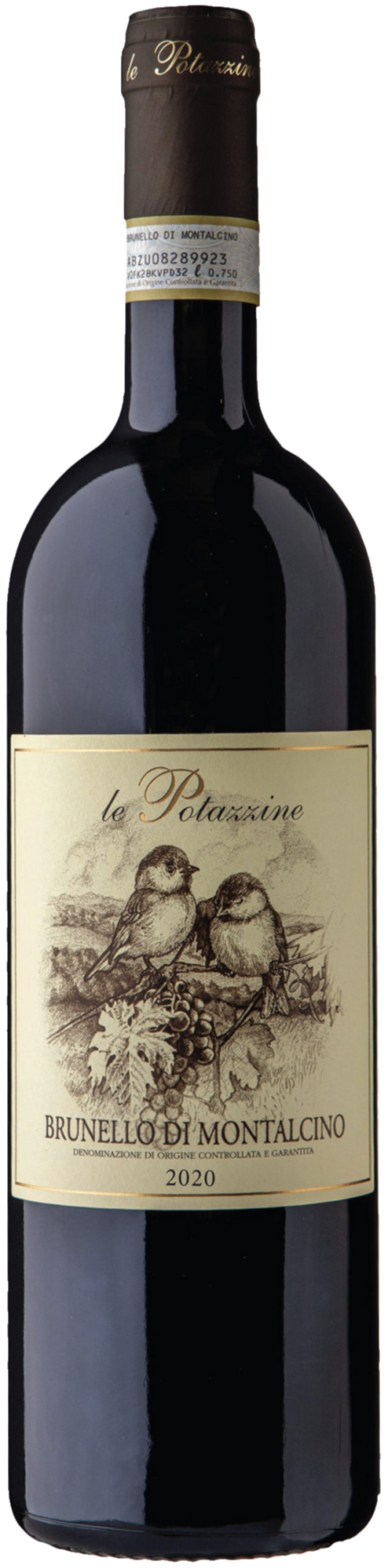
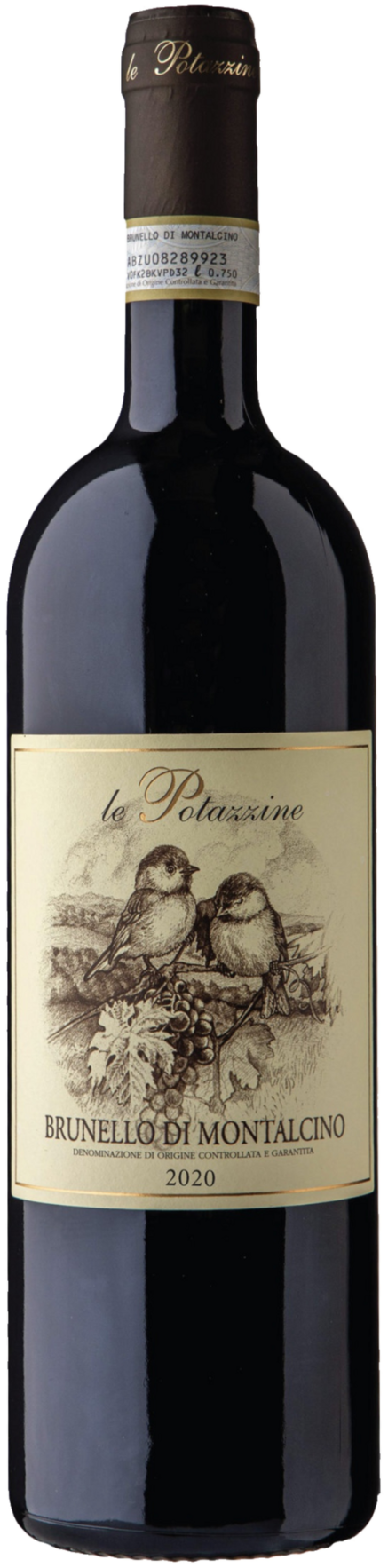
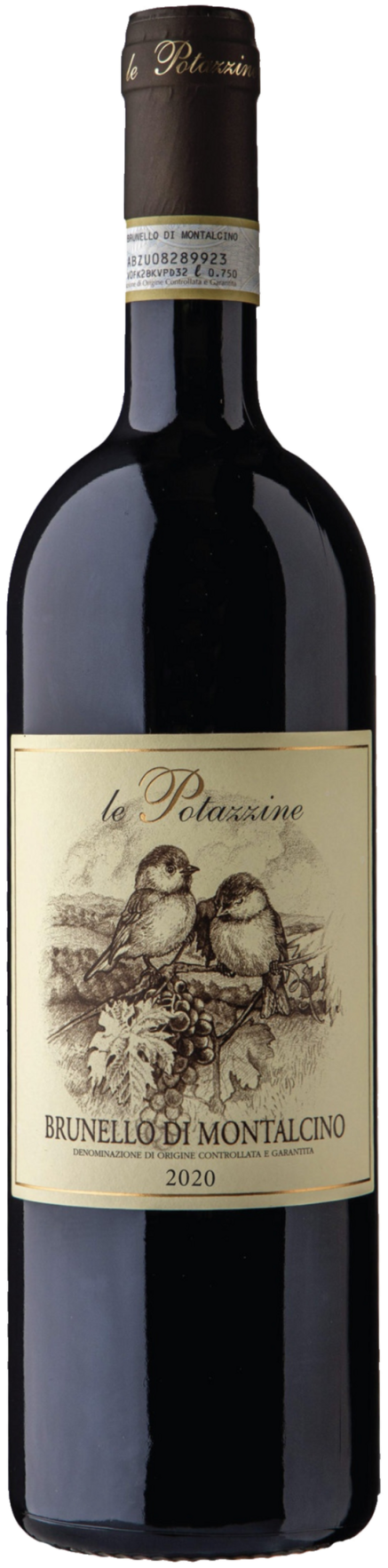
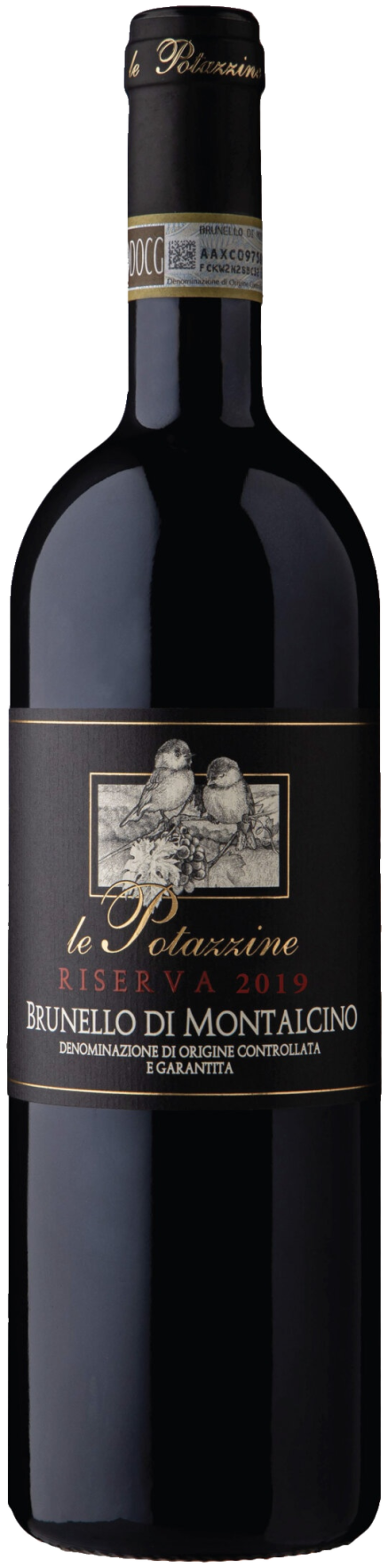
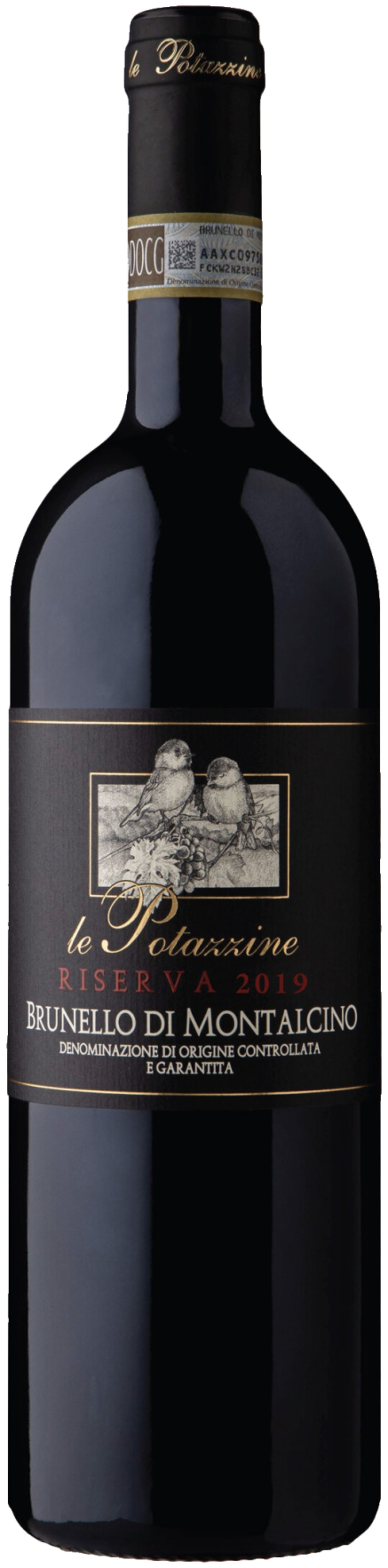
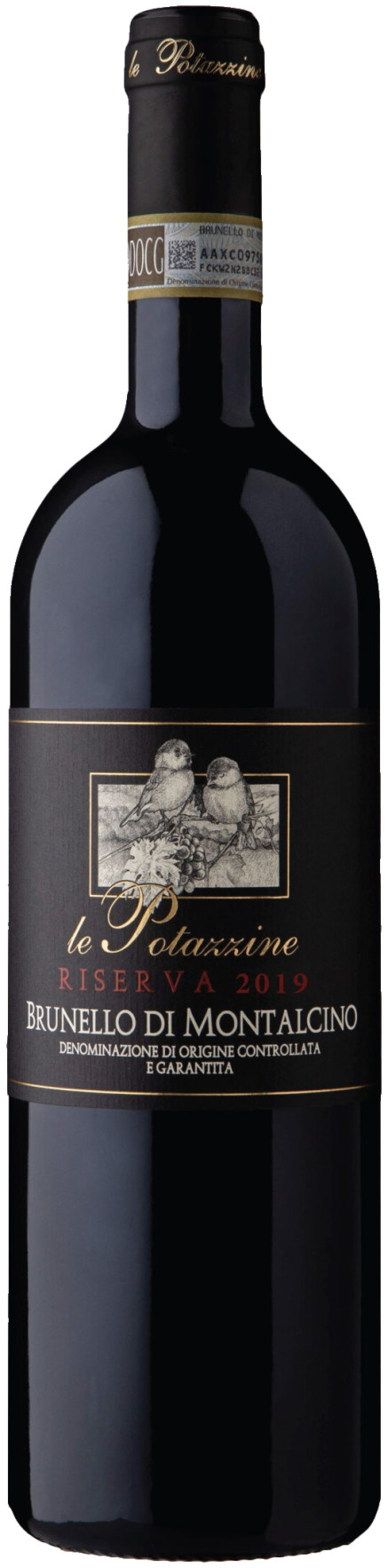
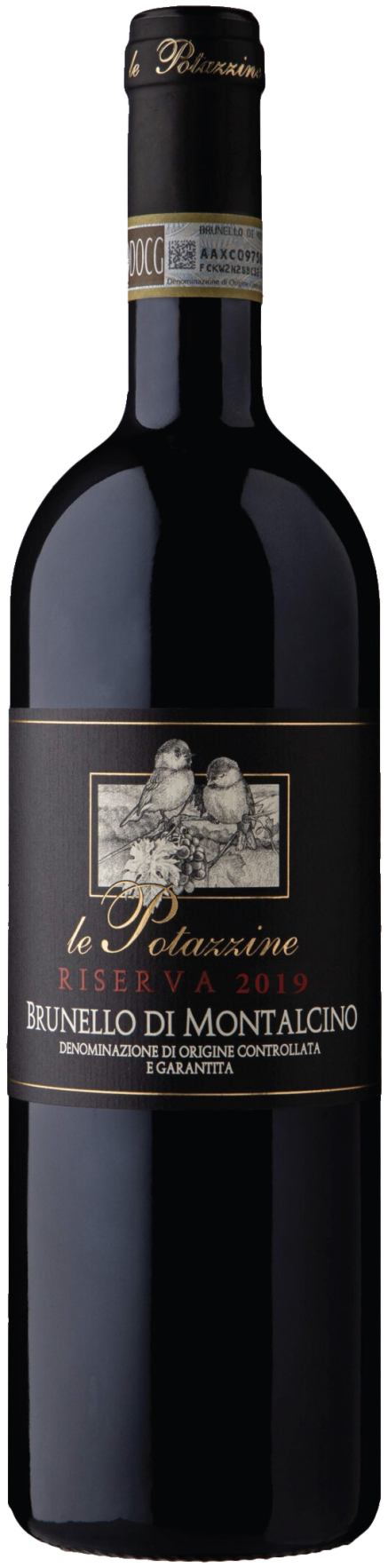
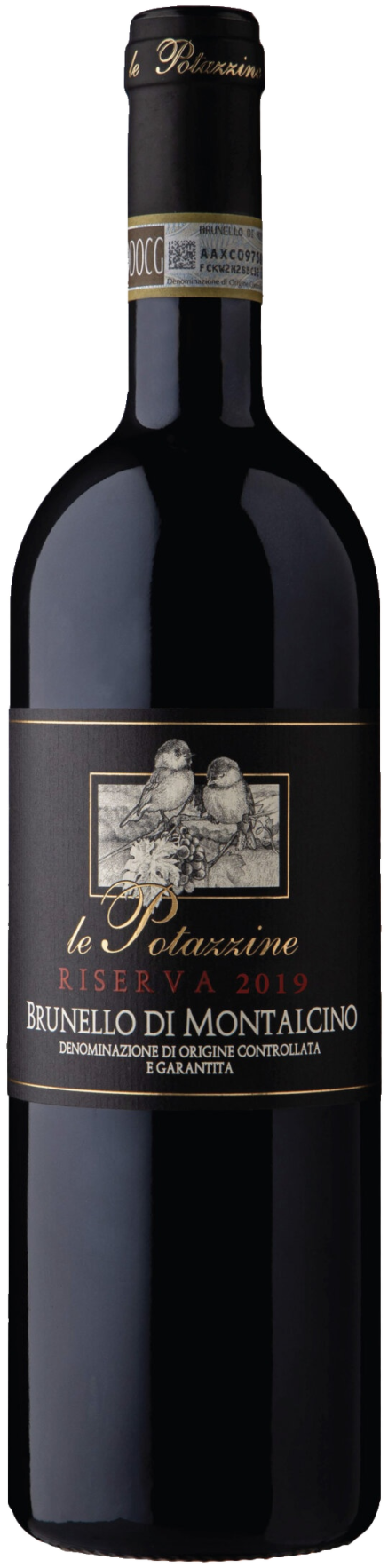
“We are four women who select the grapes.” Gigliola Giannetti says it without ceremony, and it is not an anecdote but the heart of the estate: at Le Potazzine every bunch passes over the sorting table, and the hands doing the work are the family’s own.
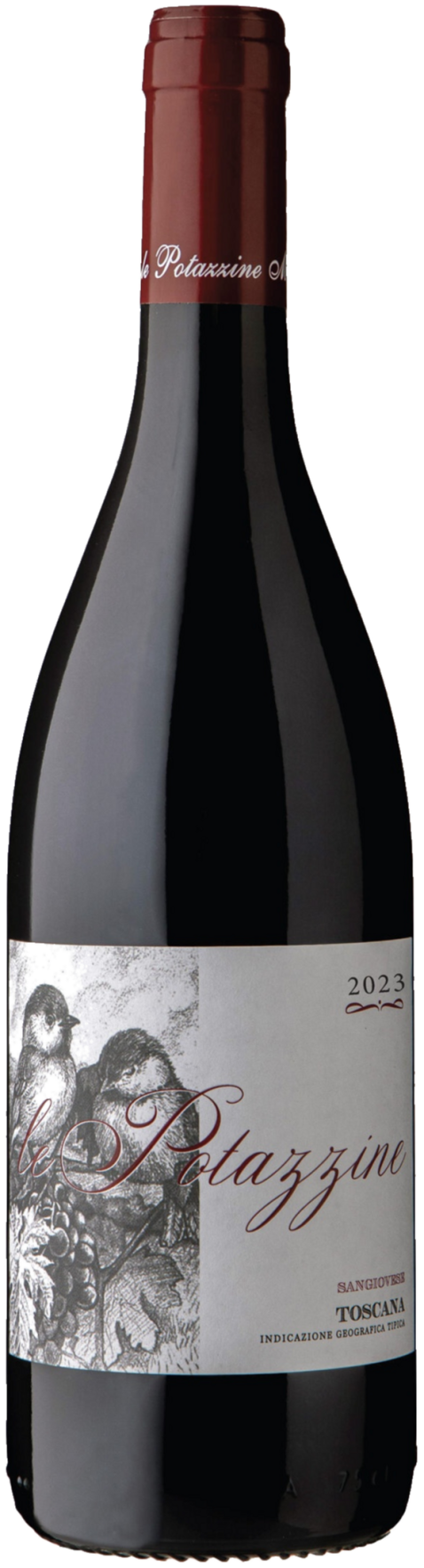
Gigliola bought the property in 1993, the year her daughter Viola was born. Four years of replanting followed; the first harvest came in 1997. When Sofia arrived in 1996 two more hectares were added to the south, bringing the total to five — precisely the five registered for Brunello today. The name refers to the potazzine, the small, brightly coloured songbirds of the Tuscan countryside, and to the pet name a grandmother used for her granddaughters. Gigliola still runs the estate, together with Viola and Sofia.
What sets this house apart is altitude, and the interplay of two sites. Le Prata lies around the cellar at 507 metres, exceptionally high for Montalcino, and gives elegance and finesse; La Torre near Sant’Angelo in Colle sits at some 420 metres and brings structure and power. The soil is a mix of clay and sand with limestone. The two sites are picked, fermented and matured separately, and are united only at bottling. Fermentation is spontaneous, on the estate’s own wild yeasts and without temperature control — a method that demands skill, since such a fermentation can stall before it has finished. Maturation takes place in large Slavonian casks of thirty and fifty hectolitres.
The result is a Brunello that lives on perfume and tension rather than force: cool, mineral, with an acidity that lasts for decades. The estate works without products based on chemical synthesis and is in conversion to organic farming. At around 35,000 bottles a year this is a small house — and precisely for that reason one that can account for every bottle.
 Exclusive wines from around the world